
Horizontal asparagus anyone?
Let’s just admit it. I hate weed barrier fabric!
Garden cloth, landscape fabric, whatever you call it, I call it “broken promises.” This product is something you purchase with the hope that it will do as advertised. But alas, it is only a temporary stunting of the indominable weed. In fact, I’m convinced that what it actually does, is create the perfect firm foundation for those relentless tiny weed seeds to anchor their roots to. Try pulling the weeds that will now grow directly out of or on top of that cloth. Mighty hard.
You are drawn into the store with visions of weed free flower gardens and luscious raised beds…so you lug rolls of it home, spend back breaking time pinning down the stuff in your perfectly prepped spot. You stand back, wiping the little sweat drops that seem to be able to dangle from the end of your nose for what seems like science-bending lengths of time, surveying your hard work at laying the foundation for what you totally believe in your heart will be the end of your weed pulling days for eternity. But no.
Well, here on the homestead I’m all about putting in the hard work, for future gains. Perennials best answer that call I believe. You put in the work, and year after year you get to eat the fruit of those labors. Enter….asparagus. You not only have to put in the work, but then you have to wait. And wait. And just when you think you might get to eat some asparagus, just wait some more. On average it takes asparagus 2-3 years to establish a “harvestable crop.” That means something more than those hairlike whispies that grow where you planted the crowns a couple of years ago. In my mind I was thinking, “well, if I have to wait so long for asparagus to land on my plate, then I’m going to have a lot of weeding to do in the meantime.” So dutifully I bought some “weed barrier.” You know why I’m putting quotes around that.
I cut perfectly spaced holes like some kind of massive asparagus stencil. Pinned it down in my forever spot, and planted the asparagus crowns. I could just taste the roasted buttery delights already. So much to my surprise, when nothing but a bunch of weeds grew in that spot, for a loooooong time, I felt lied to. I kept telling people that we were growing asparagus, and I kept pointing to my landscaped weed bed, and the look on their faces was like “huh, if you say so.” As if my gardening prowess was going to magically transform those weeds into edibles. So one day I had had it. I went out to that asparagus bed and chopped everything down. Ripping, and maiming with total abandon. I pulled all that cloth out of the bed, and about halfway through, I noticed something white in the dark rich soil. Was I seeing the biggest grub worms on the planet? I started to unearth with the fervor of a paleontologist. What was growing underneath the “weed barrier” was actually huge, thumb-sized completely white asparagus. “Weed barrier,” you say? I think we can now call it “asparagus barrier” with total certainty.
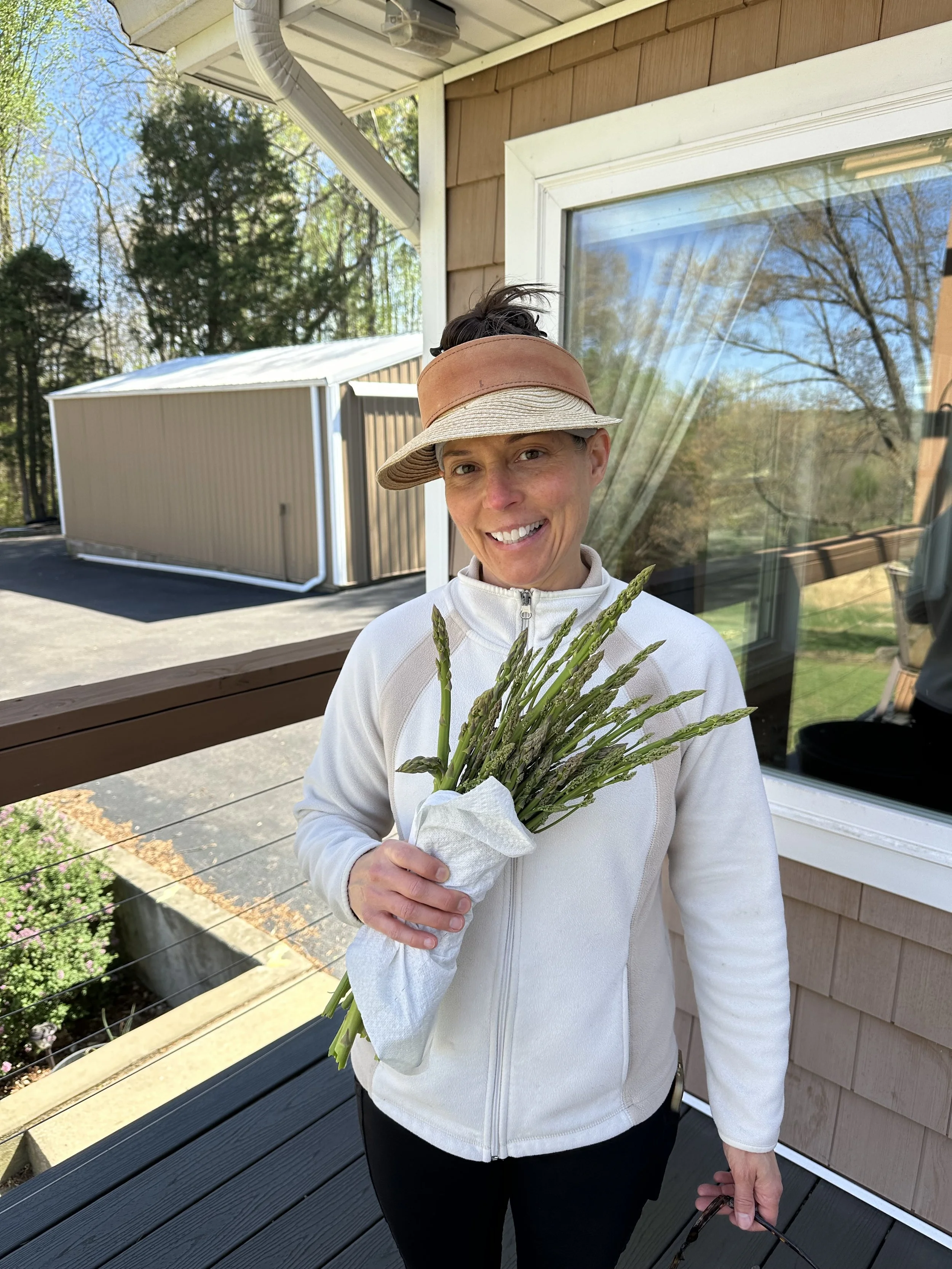
When I think of how hopeful those poor asparagus were, year after year of never seeing the light of day, yet growing bigger and fuller in the dirt. Makes me tear up a little. Suffice it to say, after I wadded up all that dreadful cloth and body slammed it into the trash, and cleaned all the scrub weeds from around the asparagus bed and watered and mulched it, something amazing happened. HUGE asparagus grew. Not all at once. But that next season my husband and I sat down to a meal that had grocery store quality asparagus on our plates. And each season since, more and more and more has been coming up.
Yes, I have to weed that bed. I do that about twice a year, along with pruning and mulching it. I have also learned the value of companion gardening. (More on that in another story) But I’m here to say that there really aren’t any true shortcuts to what needs to get done. And just because everybody else is happily buying rolls of garden fabric at Lowe’s….don’t do it.
Enjoy this story?
Do us a favor and forward this page
to someone who will too!